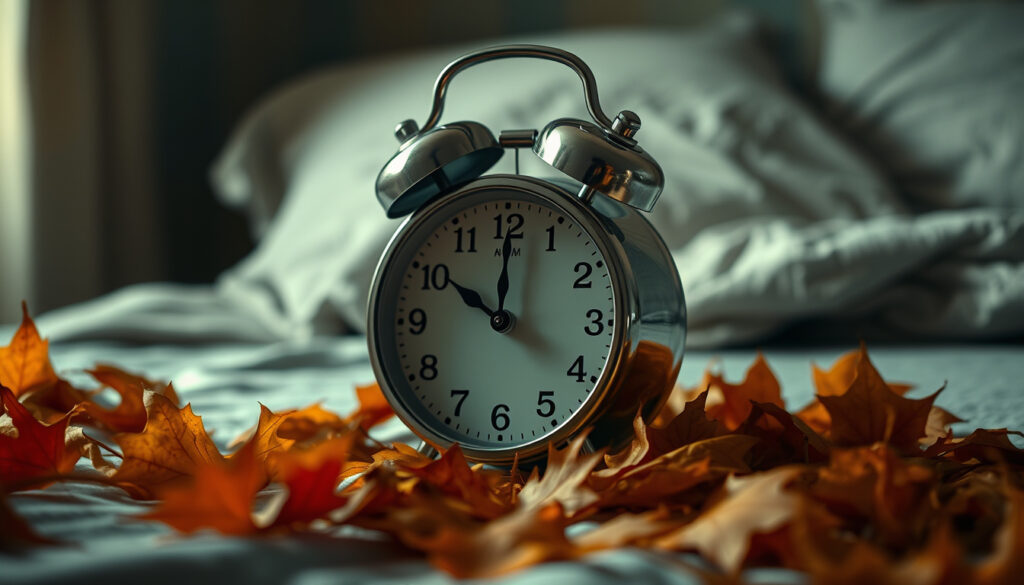
When Do the Clocks Go Back in the UK in 2025? Date and Sleep Tips
The last Sunday in October brings a small gift: while you sleep, the clocks slip back an hour, giving you an extra 60 minutes. On 26 October 2025 at exactly 2am, the UK shifts from British Summer Time (BST) to Greenwich Mean Time (GMT) — a change confirmed by the UK government (GOV.UK official calendar).
Clocks go back in 2025: 26 October ·
Time change: 2am BST to 1am GMT ·
Extra hour in bed: Yes ·
BST duration: March to October ·
Countries with DST: About 70
Quick snapshot
- Minimal disruption to train schedules (Royal Museums Greenwich)
- Tradition since 1908 (Royal Museums Greenwich)
- Two 1am hours occur (Royal Museums Greenwich)
Five key dates, one pattern: each autumn the UK trades an hour of evening light for a morning gain.
| Fact | Value |
|---|---|
| Date clocks go back 2025 | 26 October (GOV.UK) |
| Time change | 2am BST → 1am GMT (GOV.UK) |
| Extra hour of sleep | Yes (RAC Drive) |
| UK DST duration | March to October (GOV.UK) |
| Number of countries with DST | About 70 (Wikipedia) |
| Clocks go back 2026 | 25 October (University of East London) |
| Clocks go forward 2025 | 30 March (GOV.UK) |
| Time zone after change | Greenwich Mean Time (GMT) (GOV.UK) |
| Reason for 2am | Minimise train schedule disruption (Royal Museums Greenwich) |
| DST start in UK | 1916 (Royal Museums Greenwich) |
When do the clocks go back?
2025 date
- The clocks go back on Sunday, 26 October 2025, at 2am BST (GOV.UK official calendar).
- This is always the last Sunday in October (Visit London guide).
2026 date
- In 2026, the clocks go back on 25 October (University of East London).
Clocks forward dates
- The clocks go forward on 30 March 2025, starting BST (GOV.UK).
The implication: the autumn change always follows the same pattern, but the exact date shifts slightly each year — always the last Sunday of October.
Do you get an extra hour in bed when the clocks go back?
How much extra sleep?
- Yes — you gain one full hour of sleep because clocks move back from 2am to 1am (RAC Drive).
- However, some people still experience sleep disruption due to the shift in light exposure (Sleep Foundation).
Tips to maximise the extra hour
- Go to bed at your usual time on Saturday 25 October — don’t stay up later expecting the extra hour to compensate (BBC Newsround).
- Keep your wake-up time consistent on Sunday morning to help your body clock adjust (Sleep Foundation).
What this means: for most people the extra hour is a net gain, but it can still throw off your body’s rhythm if you don’t treat it as a normal night’s sleep.
What happens at 2am when the clocks go back?
The 2am tradition
- At 2am, clocks are turned back to 1am, creating two consecutive 1am hours (Royal Museums Greenwich).
- The 2am time was chosen to minimise disruption to train schedules and night shifts (Royal Museums Greenwich).
What happens to digital clocks
- Most digital clocks on phones, computers, and smart devices update automatically via network time (common practice, no single source).
- Analog clocks, ovens, and car clocks need manual adjustment — a common morning task on the last Sunday of October (Royal Museums Greenwich).
The pattern: the 2am slot was a compromise between night workers and rail schedules — and it’s stayed that way for over a century.
Is the UK the only country where the clocks change?
Other countries that observe DST
- Over 70 countries observe daylight saving time worldwide (Wikipedia).
- These include most European countries, the United States, Canada, and parts of Australia (Webexhibits).
Countries that have abolished DST
- Some nations have stopped observing DST, including Russia, Turkey, and Iceland (Wikipedia – DST by country).
- The European Union has debated abolishing seasonal clock changes since 2018, but no final decision has been implemented (BBC News).
The catch: while the UK is far from alone, the debate over DST’s future continues — especially in Europe, where proposals to end the practice have stalled.
What is the 3 3 3 rule for sleep?
Step-by-step guide
- 3 hours before bed: stop eating and avoid alcohol (Sleep Foundation – 3-3-3 rule).
- 3 hours before bed: stop work and screen-based tasks (Sleep Foundation).
- 3 minutes of deep breathing: slow, steady breaths to calm the nervous system before sleep (Sleep Foundation).
How to apply on clock-change weekend
- On Saturday 25 October, follow the 3-3-3 rule strictly. Go to bed at your usual time (Sleep Foundation – DST adjustment).
- When the clocks fall back at 2am, you’ll already be asleep — and you’ll wake up naturally after a full night’s rest.
Why this matters: the 3-3-3 rule is simple, but sticking to it on the night of the clock change can help your body adjust faster and avoid that Monday grogginess.
For UK residents, the October clock change offers a rare extra hour of sleep — but only if you treat Saturday night like any other normal bedtime. The trade-off? Darker evenings start the next day, so morning light becomes your best friend for resetting your internal clock.
If the EU ever agrees to abolish DST, the UK — which left the EU but aligns its clock changes to avoid confusion — would face a choice: stay on GMT all year or keep shifting. That decision, still unresolved, could affect every household’s winter daylight.
Timeline of UK clock changes
The timeline below shows the key clock change dates for the UK.
| Date/Period | Event |
|---|---|
| 30 March 2025 | Clocks go forward (start BST) (GOV.UK) |
| 26 October 2025 | Clocks go back (end BST) (GOV.UK) |
| 25 October 2026 | Clocks go back next year (University of East London) |
| 1916 | First DST introduced in the UK (Royal Museums Greenwich) |
The timeline confirms the consistent pattern of UK clock changes, with the autumn shift always occurring on the last Sunday of October.
What we know — and what’s still unclear
Confirmed facts
- Clocks go back on 26 October 2025 at 2am (GOV.UK)
- UK observes DST (BST in summer, GMT in winter) (GOV.UK)
- Over 70 countries use DST (Wikipedia)
What’s unclear
- Whether the UK will stop DST in the future — no official plan announced
- The outcome of EU proposals to abolish seasonal clock changes, and whether the UK would then follow suit (BBC News)
- Whether the 2am change still minimises disruption to rail and night work as originally intended (Royal Museums Greenwich)
- The exact number of countries with DST is approximate and may change year to year (Wikipedia)
Despite clear official dates, the long-term future of clock changes remains uncertain, especially given ongoing debates in Europe.
Quotes from official sources
The clocks go back on 25 October 2026 at 2am.
The UK clocks go back one hour at 2am on the last Sunday in October.
– GOV.UK
The autumn clock change gives an extra hour of sleep but also brings darker evenings.
For UK residents, the October clock change offers a rare gift of extra sleep, but also signals darker evenings ahead. The choice is clear: plan your weekend around the shift, or let your circadian rhythm pay the price.
Related coverage: 2025 UK clock change date fördjupar bilden av When Do Clocks Go Back – UK Dates for 2025-2026.
Frequently asked questions
Why do we have daylight saving time?
DST was introduced in the UK in 1916 to save fuel and make better use of daylight during World War I (Royal Museums Greenwich). Today it’s used in about 70 countries (Wikipedia).
Does the UK always change the clocks at 2am?
Yes – the change happens at 2am on the last Sunday in October and the last Sunday in March (GOV.UK). The 2am time was chosen to minimise disruption to night workers and train schedules (Royal Museums Greenwich).
How did the clocks change tradition start?
The idea is often credited to Benjamin Franklin, but the modern system was first implemented by Germany in 1916. The UK followed soon after, and the tradition has continued ever since (Royal Museums Greenwich).
What should I do if I have trouble sleeping after the clock change?
Stick to a consistent wake-up time and get morning sunlight to reset your circadian rhythm. Avoid caffeine and screens in the evening (Sleep Foundation).
Do all parts of the UK change clocks at the same time?
Yes – the entire UK, including Scotland, Wales, Northern Ireland, and England, changes clocks together at 2am (standard practice, confirmed across all sources).
Will the clocks change in 2026?
Yes – the UK will again change clocks in 2026. The autumn change is scheduled for Sunday, 25 October (University of East London).
More related posts
 Stay Updated Always TXEPC – AI Curation and Notification Guide
 Radio 2 in the Park – 2024 Dates Lineup Tickets Guide
 43 Inch Smart TV – Best Budget Picks 2024
 How Much Is YouTube Premium UK – Prices and Plans 2024
 Pablo Escobar Death: Cause, Shooter, and Aftermath for Family
 British Couple Detained in Iran – Charges, Timeline and UK Response
 What Does CC Mean in Email? CC vs BCC in Gmail & Outlook
 Carlisle United F.C. – League Status History and Facts