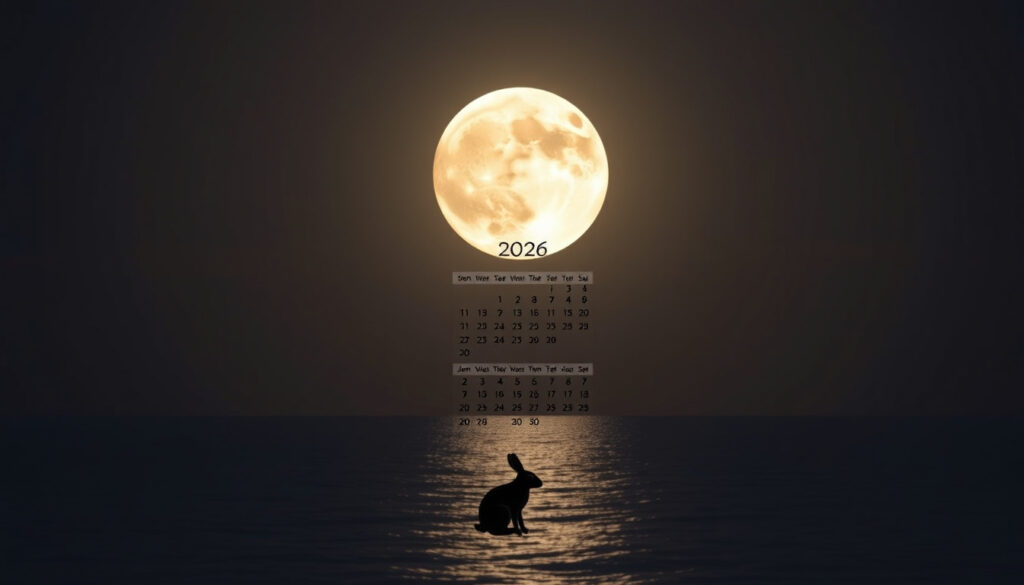
When Is the Next Full Moon? 2026 Calendar, Names & Myths
If you’ve ever glanced up on a clear Irish night and wondered when the next full moon will light up the sky, you’re not alone. The Moon’s 29.5-day rhythm is one of the most reliable celestial patterns we have, and 2026 brings a particularly interesting year with 13 full moons, including a rare Blue Moon in May. We’ve gathered the dates, traditional names, and the best science on lunar myths so you know exactly what to expect and what to leave behind.
Next full moon (2026): 31 May 2026 (Blue Moon) ·
Total full moons in 2026: 13 ·
Next full moon name: Flower Moon (May) ·
Upcoming supermoon 2026: 3 January 2026 (Wolf Moon) ·
Full moon visibility Ireland: Rises after sunset, June 1 2026
Quick snapshot
- Next full moon: 31 May 2026 at 09:45 UTC (Royal Museums Greenwich (astronomy education))
- Full moon calendar dates are astronomically calculated (Royal Museums Greenwich) (Royal Museums Greenwich (astronomy education))
- No peer-reviewed evidence for behavior changes (Royal Museums Greenwich) (Royal Museums Greenwich (astronomy education))
- Exact visibility in Ireland depends on local weather and horizon (Calendar Yearly (moon phase calculator))
- Slight variation in tidal effects from full moon are predictable but minor (Sky at Night Magazine) (Calendar Yearly (moon phase calculator))
- Full moon times vary slightly by location in Ireland due to longitude (MoonInfo, medium confidence) (Calendar Yearly (moon phase calculator))
- 3 Jan 2026: Wolf Moon (supermoon) (Calendar Yearly)
- 31 May 2026: Flower Moon / Blue Moon (Royal Museums Greenwich)
- 27 Dec 2026: Cold Moon (supermoon) (Royal Museums Greenwich)
- After the Blue Moon, the next full moon is the Strawberry Moon on 30 June 2026 (Royal Museums Greenwich)
- 2027 will begin with a full moon on 2 January (Royal Museums Greenwich)
Of the 13 full moons in 2026, two are supermoons and one is a Blue Moon – a pattern that only aligns a few times per decade.
Here are the key details at a glance:
| Label | Value |
|---|---|
| Next full moon | 31 May 2026 |
| Full moon name | Flower Moon / Blue Moon |
| Total full moons 2026 | 13 |
| Next supermoon | 3 January 2026 (Wolf Moon) |
| Next new moon | 16 May 2026 |
| Full moon cycle | Every 29.5 days (Royal Museums Greenwich) |
When is the next full moon?
Next full moon date and time (Ireland)
- The next full moon is on 31 May 2026 at 09:45 UTC (Royal Museums Greenwich).
- In Ireland, that converts to 10:45 IST (UTC+1). The Moon will rise after sunset on the evening of 1 June, making it visible across the country (Calendar Yearly).
- This is the second full moon in May, which qualifies it as a Blue Moon (Sky at Night Magazine).
Full moon calendar 2026 (all 13 moons)
Thirteen full moons in one year is unusual – it happens when a calendar month hosts two full moons. Here are the dates for Ireland:
- 3 January (Wolf Moon, supermoon) – Calendar Yearly
- 1 February (Snow Moon) – Royal Museums Greenwich
- 3 March (Worm Moon)
- 1 April (Pink Moon)
- 1 May (Flower Moon)
- 31 May (Blue Moon)
- 30 June (Strawberry Moon) – Royal Museums Greenwich
- 29 July (Buck Moon) – Royal Museums Greenwich
- 27 August (Sturgeon Moon)
- 26 September (Harvest Moon) – Calendar Yearly
- 25 October (Hunter’s Moon)
- 24 November (Beaver Moon)
- 27 December (Cold Moon, supermoon) – Royal Museums Greenwich
The implication: this is a slightly richer lunar year than usual, with more full moons to observe than in a typical 12-moon cycle.
What full moon is in February? And what are the names of all full moons?
February full moon: Snow Moon
February’s full moon is called the Snow Moon, a name rooted in Native American traditions that refer to the heaviest snowfalls of the year (Royal Museums Greenwich). In 2026, it falls on 1 February.
List of traditional full moon names by month
The names we use today come from a mix of Algonquin, Colonial American, and European folklore. Each month carries a distinctive label:
- January: Wolf Moon
- February: Snow Moon
- March: Worm Moon
- April: Pink Moon
- May: Flower Moon
- June: Strawberry Moon
- July: Buck Moon
- August: Sturgeon Moon
- September: Harvest Moon
- October: Hunter’s Moon
- November: Beaver Moon
- December: Cold Moon
When a second full moon occurs in a single month – as in May 2026 – it’s called a Blue Moon (Sky at Night Magazine).
For anyone who enjoys naming the moons or planning seasonal activities around them, the traditional names give a cultural anchor. The Blue Moon in May 2026 is a once-every-two-or-three-years event – worth noting if you’re a moon-phase enthusiast.
The pattern: traditional names connect lunar cycles to seasonal rhythms, especially relevant for those who track gardening, hunting, or folklore.
Why is the October full moon special?
October 2025 supermoon details
The October 2025 full moon is a supermoon, occurring on 7 October 2025. A supermoon happens when the full moon coincides with the Moon’s closest approach to Earth (perigee), making it appear about 14% larger and up to 30% brighter than a typical full moon (Royal Museums Greenwich).
October 2026 full moon date and name
In 2026, October’s full moon is the Hunter’s Moon on 25 October. It’s not a supermoon but remains one of the most referenced moons in folklore, traditionally marking the time for hunting and storing meat for winter (Royal Museums Greenwich).
What this means: if you missed the 2025 supermoon, the next supermoon in 2026 is in December, not October.
Does a full moon affect behavior, physical, or mental well-being?
What science says about full moon and sleep
Multiple studies have looked at whether full moons affect sleep. Some research reports a slight reduction in sleep duration of 5–10 minutes on nights around the full moon, but the effect is inconsistent and not confirmed by all studies (Royal Museums Greenwich). No large-scale, peer-reviewed evidence shows a robust link between full moons and insomnia in the general population.
Does a full moon affect mood or mental health?
The myth that full moons cause lunacy, increased crime, or emotional instability has been tested widely. Systematic reviews find no causal relationship between the lunar phase and psychiatric admissions, violent crime, or suicide rates (Royal Museums Greenwich). Folklore associated with werewolves and lunar madness remains just that – folklore.
“There is no scientific evidence that the Moon influences human behaviour in a statistical way.”
Royal Museums Greenwich (astronomy education)
The pattern: what we attribute to the Moon often has more to do with confirmation bias and anecdotal stories than real data.
What should you avoid during a full moon?
Three things to avoid (from Grazia USA)
While scientific evidence doesn’t support behavioral changes, some cultural traditions suggest avoiding impulsive decisions, starting big arguments, or making major financial moves during a full moon (Grazia USA). These are personal recommendations, not medical advice.
- Don’t make snap decisions – full moon energy is said to amplify emotions, so wait 24 hours.
- Avoid heavy arguments – tempers may flare more easily.
- Don’t start a new project – tradition holds that full moon is a time for completion, not initiation.
Five things to do during a full moon
Many self-care routines embrace the full moon as a reflective moment. Grazia USA suggests setting intentions, resting, cleaning your space, meditating, and taking a ritual bath (Grazia USA). None of these are medically prescribed, but they can serve as mindful pauses in a busy month.
Self-care rituals around the full moon are personal and culturally meaningful, but they should not replace professional medical or mental health care when needed.
The implication: cultural practices offer structure, but scientific evidence should guide health decisions.
How to check the next full moon (easy steps for Ireland)
Finding the precise date for your location is straightforward:
- Use a reliable calendar: The Royal Museums Greenwich publishes an annual full moon calendar with exact UTC times (Royal Museums Greenwich).
- Adjust for Irish time: Add one hour for Irish Standard Time (IST, UTC+1) from late March to late October. Calendar Yearly provides times directly for Dublin (Calendar Yearly).
- Check local visibility: The Moon rises about 50 minutes later each night. On the full moon day, it rises around sunset – so look east after dusk.
2026 full moon timeline
Six key milestones in Ireland’s lunar year:
| Date | Event | Source |
|---|---|---|
| 3 January 2026 | Wolf Moon (supermoon) | Calendar Yearly |
| 1 February 2026 | Snow Moon | Royal Museums Greenwich |
| 3 March 2026 | Worm Moon | Royal Museums Greenwich |
| 31 May 2026 | Flower Moon / Blue Moon | Royal Museums Greenwich |
| 29 July 2026 | Buck Moon | Royal Museums Greenwich |
| 27 December 2026 | Cold Moon (supermoon) | Royal Museums Greenwich |
Confirmed facts
- Next full moon: 31 May 2026 09:45 UTC (Royal Museums Greenwich)
- Full moon calendar dates are astronomically calculated (Royal Museums Greenwich)
- No peer-reviewed evidence for behavior changes (Royal Museums Greenwich)
What’s unclear
- Exact visibility in Ireland depends on local weather and horizon (Calendar Yearly)
- Slight variation in tidal effects from full moon are predictable but minor (Sky at Night Magazine)
“The full moon rises around sunset and is visible all night – perfect for evening walks in Ireland’s countryside.”
Timeanddate.com (moon phase calculator)
“Use the full moon as a reset – clean your space, meditate, and set clear intentions for the month ahead.”
Grazia USA (lifestyle magazine)
For Irish sky-watchers, the takeaway is practical: the Moon’s schedule is fixed, and the next show – the Flower Moon Blue Moon on 31 May 2026 – is well within sight. Whether you use it as a moment for reflection or simply enjoy the view, you now have the facts to plan ahead.
Frequently asked questions
How often does a full moon occur?
Approximately every 29.5 days, which means most years have 12 full moons. A year with 13 full moons, like 2026, occurs when a calendar month contains two full moons.
What is a supermoon?
A full moon that coincides with the Moon’s closest approach to Earth (perigee). It appears up to 14% larger and 30% brighter than a typical full moon (Royal Museums Greenwich).
What is a Blue Moon?
A Blue Moon is the second full moon in a single calendar month. It occurs roughly once every 2.5 years. The next one for Ireland is on 31 May 2026 (Sky at Night Magazine).
Can a full moon cause insomnia?
Some small studies suggest a slight reduction in sleep (5–10 minutes) around the full moon, but the effect is inconsistent and not robustly confirmed by large-scale research (Royal Museums Greenwich).
Is the full moon brighter than other phases?
Yes. The full moon is about 12 times brighter than a first-quarter moon because the entire near side is illuminated by the Sun.
Why does the moon sometimes appear orange during a full moon?
When the Moon is low on the horizon, its light passes through more atmosphere, scattering shorter wavelengths and leaving the orange/red hues visible. This can happen during any full moon near sunset or sunrise.
How long does a full moon last?
Astronomically, the moment of exact opposition (Earth between Sun and Moon) lasts an instant. In practice, the Moon appears full for about three days – the day before, the day of, and the day after the exact time.
Does a full moon affect tides?
Yes. Spring tides – the highest and lowest tides – occur at full moons and new moons because the Sun and Moon align to pull the oceans together (Sky at Night Magazine).
For Ireland’s coastal communities, full moon spring tides can mean higher than normal sea levels. Check local tide tables if you’re planning a trip to the shore on 31 May 2026 or any other full moon date.
More related posts
 What Should My Blood Pressure Be? Normal by Age & Gender
 Bramley-Moore Dock Stadium: Capacity, Naming Rights & Future
 England National Football Team vs Wales National Football Team Lineups – Tactical View
 Cast of Zero Day – Full Cast List and Roles
 UK Driving License Eyesight Checks: Requirements & Test Guide
 Benefits of Apple Cider Vinegar – Science-Backed Effects and Risks
 18 Stone in Lbs – Exact Conversion Guide and Charts
 Cast of Train Dreams – Joel Edgerton, Felicity Jones & Full Roles