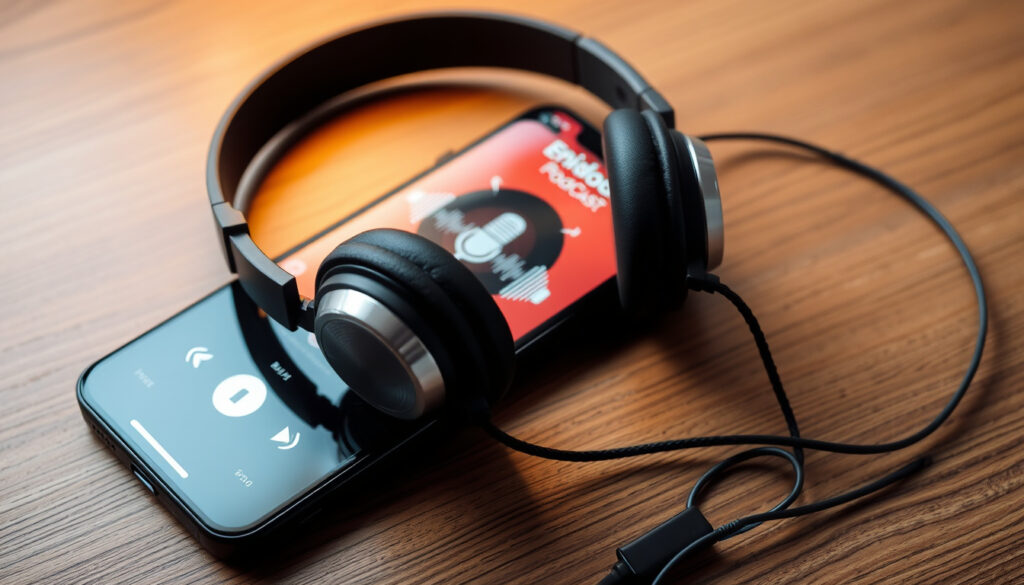
What Is a Podcast? Definition, Examples & How to Listen
If you’ve ever found yourself killing time on a commute or a jog by pressing play on a stranger’s voice, you already know the appeal of a podcast. Millions of people do it daily, and the format keeps growing because it fits so neatly into a life that doesn’t stop moving. Below, we break down exactly what a podcast is, where it came from, and what you need to start listening.
Primary Medium: Audio · Delivery Method: Digital download over Internet · Possible Formats: Audio, video, PDF · Hosts Term: Podcasters
Quick snapshot
- Podcasts delivered via RSS (Riverside)
- Primarily audio (Salesforce)
- Exact global listener numbers vary across sources (Wikipedia)
- Roots in 1980s audioblogs → Ben Hammersley coined “podcast” in 2004 → Steve Jobs added podcast subscriptions to iTunes in 2005 (uStudio)
- Video podcast versions expanding on YouTube, niche micro-podcasts growing through Substack and Patreon (Riverside)
Four defining characteristics, one pattern: a podcast is a subscription-based, on-demand audio programme distributed automatically to listeners who opt in.
Each row in this table summarises the foundational facts that shape how podcasts work and who hosts them.
| Field | Detail |
|---|---|
| Definition | Program episode made available in digital format for download over the Internet |
| Primary Medium | Audio |
| Hosts | Podcasters |
| Content Types | Edited radio, highlights, unique episodes |
What is an example of a podcast?
Popular podcast series
The Joe Rogan Experience, an interview-format show, has generated millions of views per episode and set the template for long-form conversation podcasts (Riverside). Other top interview podcasts like The Diary of a CEO, The Ben Shapiro Show, and Armchair Expert with Dax Shepard draw audiences through celebrity and expert conversations. Individual episodes can run from one minute to three hours, and release schedules range from daily to monthly depending on the podcaster (The Podcast Host).
Podcast formats
Beyond interviews, narrative podcasts tell stories—non-fiction like true crime or fiction like fantasy audio dramas (Salesforce). Panel discussion podcasts like The Red Box from The Times feature multiple guests with a moderator, giving audiences diverse perspectives in one episode (Captivate.fm). Monologue podcasts let a single host build a loyal following through consistent voice and theme. Some podcasters also release video versions on YouTube, expanding the format beyond audio-only.
The implication: the format you choose shapes your audience’s expectations—conversational ease for interviews, structured fairness for panels, and narrative arc for stories.
Is it free to listen to podcasts?
Free platforms
The majority of podcasts are free. Ad-supported models on Spotify, Apple Podcasts, and YouTube let listeners access full episodes at no cost. Subscribing via RSS feed delivers new episodes automatically to your app without visiting a website each time, a key technical advantage over radio’s live schedules (Wikipedia).
Premium options
Platforms like Spotify and Patreon offer paid tiers with ad-free listening, bonus episodes, and early access. Apple Podcasts also carries subscription-only shows. Most free podcasts carry one to three dynamically inserted ads per episode; premium tiers remove these for a recurring fee.
For listeners on a budget, free tiers cover the full core experience—the paid layer is mostly convenience and bonus content. For podcasters, ad-supported free models generate revenue without asking audiences to open their wallets first.
The catch: free platforms store your subscription history in their ecosystem, so switching apps can mean losing your episode queue unless you manage RSS feeds separately.
The implication: the YouTube ecosystem gives podcasts a free visibility boost that audio-only platforms cannot match, widening the audience funnel at no cost to the listener.
How do I start listening to podcasts?
Choosing an app
Download Spotify, Apple Podcasts, or YouTube Music on your phone. All three are free, support RSS subscription, and let you stream or download episodes for offline listening. Apple Podcasts comes pre-installed on iOS; Spotify is available on both iOS and Android.
Finding content
Search by topic (true crime, language learning, comedy) or browse curated charts on Apple Podcasts or Spotify. Subscribe to shows that interest you—new episodes land in your library automatically. You can stream live or download ahead of time for commutes, workouts, or chores.
- Download a podcast app (Apple Podcasts, Spotify, or similar)
- Search or browse for topics or specific shows
- Subscribe via RSS so episodes arrive automatically
- Listen on your schedule—commute, gym, household tasks
The RSS feed behind podcast subscriptions means your episode library follows you across platforms. If you switch apps, you can re-subscribe and pick up where you left off.
What this means: podcasting’s biggest structural win over radio is that nothing airs at a fixed time. You choose when, and the episode waits for you.
The implication: for listeners who travel frequently, the RSS model guarantees uninterrupted access regardless of regional app restrictions.
How do podcasters make money?
Revenue streams
Most podcast revenue comes from sponsorships—brands pay podcasters to read ad reads targeted to listener demographics (Salesforce). Affiliate links and listener donations via Patreon add secondary income streams. Premium subscription models for exclusive bonus content generate recurring revenue without ads.
Monetization timing
Podcasters typically begin monetizing once they build a consistent audience of at least a few thousand downloads per episode. Early-stage podcasters can apply for Patreon support or accept affiliate links even with smaller audiences.
For creators weighing free vs. premium models: free ad-supported shows reach the widest audience and generate modest income at scale. Exclusive paid content limits reach but builds a more predictable revenue stream from dedicated fans.
What are the disadvantages of podcasts?
Common drawbacks
Podcasts are audio-only, which limits how actively you can engage with material compared to reading or video. You cannot skim visually for specific sections without rewinding. Information quality varies widely given the low barrier to entry—anyone with a microphone can publish (Mailchimp).
Panel format podcasts carry specific trade-offs: scheduling multiple guests is difficult, remote recording introduces audio quality issues, and a skilled moderator is essential to prevent one voice dominating the conversation (Captivate.fm).
Learning limitations
Podcasts are excellent for storytelling and background learning but fall short for structured, visual-dependent learning. Technical topics requiring diagrams, step-by-step demonstrations, or interactive exercises are harder to follow in audio-only format. Concepts without narrative hooks can feel abstract and harder to retain without visual reinforcement.
Why this matters: for learners who need active engagement or visual reference, podcasts work best as a supplement to other formats—not a standalone curriculum.
Upsides
- Mental well-being: relaxing and reducing stress (Salesforce)
- Improves listening skills and comprehension
- Affordable or free to access
- Supports personal growth during multitasking
- Low barrier to entry for creators (Mailchimp)
Downsides
- Audio-only limits visual learning and active engagement
- Information quality varies; no gatekeeping
- Passive format makes technical content harder to follow
- Rewinding to reference specifics is clumsy
- Finding new podcasts can feel overwhelming with 4.55 million shows globally (Wikipedia)
How much does it cost to start a podcast?
Launching a podcast can cost as little as $50–$100 with a budget USB microphone, a pop filter, and free recording software like Audacity (Mailchimp). Hosting platforms like Anchor and Buzzsprout offer free tiers; paid plans start around $5–$20 per month as your show grows. Professional studio-quality recordings may require $300–$500 in equipment, but the format is deliberately low-barrier by design.
For anyone curious about starting a podcast, the math is straightforward: you can launch for under $100 or invest $500+ for professional sound quality. Your audience expectations—not your equipment budget—should drive that decision.
The pattern: podcasting’s accessibility is its defining commercial feature. Unlike broadcast television or print magazines, the format rewards content over production value.
How do podcasts differ from radio?
The core difference is on-demand access. Radio airs on a fixed schedule—you tune in when the programme is live. Podcasts exist as files you download or stream whenever you choose. RSS subscription delivers new episodes automatically to your app, eliminating the need to check manually for updates (Riverside).
Production standards also differ: radio typically involves professional studios and broadcast regulations. Podcasting is largely unregulated and relies on a creator’s own judgment about content, pacing, and format (Mailchimp).
What this means: for listeners, podcasts replace appointment listening with an always-available library. For creators, that shift in control is the entire value proposition.
A podcast is a programme episode made available in digital format for download over the Internet. The format covers any topic, runs any length, and releases on any schedule—morning news, true crime deep-dives, language lessons, or comedy banter. Over 115,000 English-language podcasts and 4.55 million globally are available, with growth driven by affordable recording tools, fast internet, and niche communities that make any interest a viable show (Wikipedia).
For curious new listeners, the entry point is free and takes five minutes: download an app, search a topic you care about, and subscribe. For creators, the barrier is equally low—basic equipment and an internet connection are enough to publish. The format rewards consistency and specific niche appeal over production polish.
What is the main purpose of a podcast?
The primary purpose is on-demand audio entertainment and education. Podcasters create episodic content on topics ranging from news and politics to hobbies and storytelling, giving audiences access to curated conversations and information they can consume while multitasking.
What is a podcast and how does it work?
A podcast is an audio programme distributed digitally via an RSS feed. Listeners subscribe through an app, and new episodes download or stream automatically. The on-demand model removes fixed broadcast schedules, letting listeners consume content whenever they choose.
What is a podcast simple definition?
A podcast is a digital audio programme, available on demand, typically released as a series of episodes that subscribers receive automatically through an app. Some podcasts also offer video versions or PDF companion materials.
What are the top 5 most listened to podcasts?
Popular interview podcasts include The Joe Rogan Experience, The Diary of a CEO, The Ben Shapiro Show, and Armchair Expert with Dax Shepard. Apple Podcasts and Spotify publish regular top-charts rankings that vary by region and category.
How much does it cost to start a podcast?
A basic setup costs $50–$500 for a microphone, pop filter, and optional accessories. Free recording software (Audacity) and free hosting tiers (Anchor) let creators publish at no cost. Professional setups for higher production quality run $300–$500 or more.
What is a podcast app?
A podcast app is software that lets you discover, subscribe to, and play podcast episodes. Apple Podcasts, Spotify, and YouTube Music are the most widely used. Apps handle RSS subscriptions, automatic downloads, and playback controls including speed adjustment and silence skipping.
What is a podcast for kids?
Kids’ podcasts use age-appropriate storytelling, educational themes, and shorter episode lengths (typically 10–30 minutes) to engage younger listeners. Examples include story-driven shows that cover history, science, and imagination. Parents can filter content by ratings and topic through podcast apps.
“A podcast is an online audio program that you can download and listen to on your computer or mobile.”
“Podcasts, previously known as ‘audioblogs’, have roots dating back to the 1980s.”
Related reading: Newspaper Definition, History, Types
voices.com, history.org.uk, michbar.org, historiansplaining.com, youtube.com
More related posts
 British Couple Detained in Iran – Charges, Timeline and UK Response
 Best Earplugs for Sleeping – Top Lab-Tested Picks
 Brentford vs Nottm Forest – Preview, Prediction and Lineups
 Who Dies in Stranger Things Season 5 – Rumors, Odds and Predictions
 Charlotte Jordan: New BBC Drama, The Archers Role, Corrie Exit
 Nationwide Credit Card Rate Increase: Impact & Next Steps
 How Much Is YouTube Premium UK – Prices and Plans 2024
 Corey Gamble: Net Worth, Age, Job, and Kris Jenner