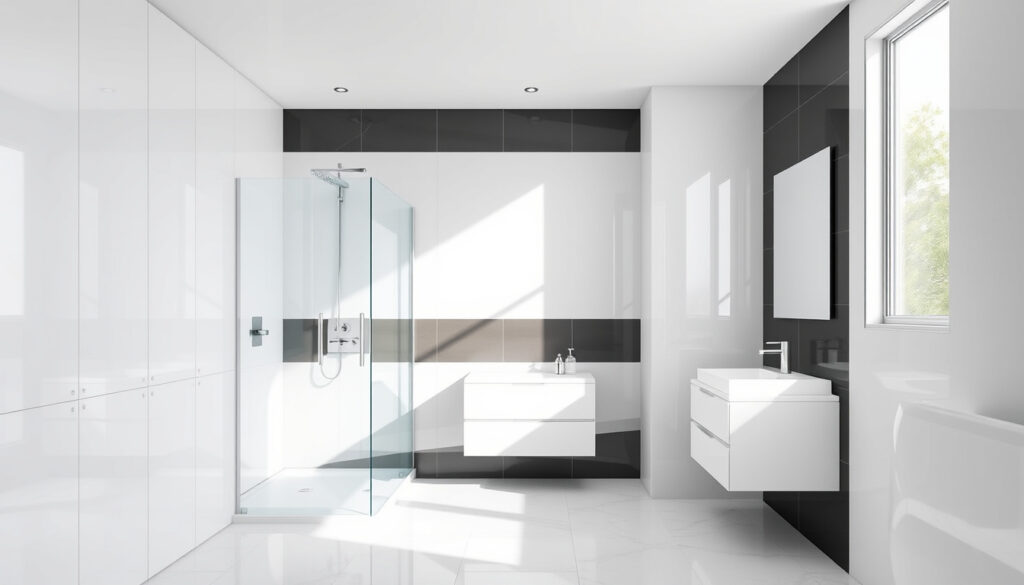
PVC Bathroom Wall Panels: Benefits, Costs & Install
If you’ve been putting off a bathroom refresh because tiling feels like a weekend-long ordeal you’ve neither the patience nor the budget for, you’re not alone. A growing number of homeowners and landlords across the UK and Ireland are discovering that PVC wall panels offer a surprisingly practical alternative — one that doesn’t require hiring a tiler, waiting for grout to cure, or spending the equivalent of a small holiday on materials. What makes this option worth knowing about in 2026 goes beyond simple cost savings.
Panel Width: 250mm · Panel Height: 2650mm · Thickness: 8mm twin wall · Key Feature: 100% waterproof · Durability: Years without warping
Quick snapshot
- Waterproof, easy install, low maintenance (Panel Company UK)
- Cheaper, faster, installable over existing tiles (Panel Company UK)
- Years-lasting, no warping, UV resistant (Kalsi Plastics)
- Tongue-and-groove interlocking, 4-8 hours for standard bathroom (Kalsi Plastics)
| Specification | Value |
|---|---|
| Material | PVC |
| Waterproof | Yes, 100% |
| Install Type | Tongue and groove |
| Suitable Areas | Bathrooms, showers |
Is PVC wall panel good for a bathroom?
PVC wall panels have earned their place in modern bathroom renovations because they solve the core problem that makes bathrooms miserable to maintain: moisture. Unlike ceramic tiles with their endless grout lines, PVC panels present a continuous waterproof surface that repels water entirely. B&Q, one of the UK’s largest home improvement retailers, confirms that bathroom wall panels are waterproof and offer a quick, stylish alternative to tiles with easy installation and maintenance.
Key Benefits
- 100% Waterproof: PVC panels do not require grout and do not develop mould with proper maintenance, unlike tiles. The continuous surface eliminates the porous grout lines where mould typically takes hold.
- No Grout Worries: Traditional tiling requires meticulous grouting and days of drying time before the bathroom can be used. PVC installation requires no grouting and no drying time — the room is ready immediately according to Kalsi Plastics.
- Install Speed: Standard bathroom PVC panel installation takes 4-8 hours with basic DIY tools, compared to multiple days for tiling.
For landlords managing rental properties, the speed advantage translates directly to lost rent. A tiled bathroom renovation might take a week before it’s usable; a PVC panel installation is finished in a single day.
Design Options
Modern PVC panels come in various finishes including matte, gloss, and textured surfaces that mimic stone or marble without the associated cost or weight. The tongue-and-groove or click-fit joint systems ensure panels interlock seamlessly, creating a smooth, professional appearance that casual observers cannot distinguish from tiled walls at first glance.
The implication: for bathrooms that see heavy daily use — family homes, rental properties, shared accommodations — PVC panels offer a practical combination of waterproof performance and aesthetic versatility that traditional tiling simply cannot match without significantly higher budgets.
What is the disadvantage of PVC wall panels?
PVC panels are not without trade-offs. The most commonly cited disadvantage is that, compared to premium stone or ceramic tiles, PVC can read as less luxurious to some homeowners who prioritize high-end aesthetics over practical maintenance. Additionally, while high-quality PVC panels resist warping under normal conditions, panels installed in areas with significant temperature fluctuations or direct sunlight exposure may eventually show signs of wear that tiled walls would not.
Major Drawbacks
- Perceived Premium Look: Ceramic tiles — particularly natural stone varieties — remain the preferred choice for high-end bathroom designs where budget is not the primary constraint. PVC cannot replicate the tactile quality of real stone.
- Temperature Sensitivity: Prolonged exposure to extreme heat or direct sunlight can cause PVC to expand and contract. For this reason, panels are not recommended immediately surrounding open showers with powerful steam or direct sunlight from skylights.
- Repair Complexity: While individual tiles can be replaced without disturbing adjacent tiles, a damaged PVC panel may require removing adjacent panels to access fixing points, depending on the installation method.
What this means: if your bathroom renovation prioritizes resale value in a premium property market, the aesthetic trade-off may outweigh the practical benefits. For most standard homes, rental properties, and budget-conscious renovations, however, these drawbacks rarely disqualify PVC from serious consideration.
Is it cheaper to tile or panel a bathroom?
The cost comparison strongly favours PVC panels for most standard bathroom installations. According to Panel Company UK, the average cost of bathroom wall tiles is £50 per square metre, with prices ranging from £20-£400 depending on tile choice. When labour, grout, and adhesive are factored in, the average total cost to tile a bathroom reaches £110 per square metre — excluding professional installation fees. PVC panel installation, by contrast, costs approximately £100 per wall without labour, according to the same source.
These figures exclude labour costs for professional installation. Tiling typically requires a tiler at £30-£60 per hour, adding £200-£500 to a standard bathroom depending on size. PVC panel installation, requiring no specialist tiling skills, can often be completed by a competent DIYer or a general handyman at lower rates.
Cost Breakdown
| Bathroom Size | PVC Panels (AUD) | Acrylic Panels (AUD) |
|---|---|---|
| 900-1000mm shower (2 panels) | $298-$358 | $1,140-$1,328 |
| 1200 x 900mm shower (3 panels) | $447-$537 | $1,710-$1,992 |
| 1.2m x 2.1m ensuite (4 panels) | $596-$716 | $2,280-$2,656 |
| 2m x 2.5m bathroom (5 panels) | $745-$895 | $2,850-$3,320 |
| 2m x 3m bathroom (6 panels) | $894-$1,074 | $3,420-$3,984 |
| 3.5m x 2.5m bathroom (9 panels) | $1,341-$1,608 | $5,130-$5,976 |
For a 2m x 3m bathroom, PVC panels cost approximately 60% less than acrylic alternatives, according to Wet Wall Works Australia. This price advantage is consistent across all size categories and reflects the fundamental material cost difference: PVC panels run $149-$179 per panel versus $380-$442 for acrylic panels of comparable dimensions.
The trade-off: homeowners who value complete hands-off renovation may still prefer professional tiling for the assurance of expert workmanship. For those willing to handle installation themselves or source a general tradesperson, PVC panels offer substantial savings that remain compelling across every budget tier.
Can you put PVC panels over tiles in a bathroom?
Yes, and this is one of PVC panels’ most compelling practical advantages. PVC panels can be fitted over existing tiles, eliminating removal and wall repair costs that typically add £50-£150 to a tiling project, according to Panel Company UK. This makes panels particularly attractive for landlords renovating tenanted properties or homeowners who want to update their bathroom without the disruption of a full gut renovation.
Installation Steps Over Tiles
- Prepare the wall surface: Clean the existing tiles thoroughly, ensure the surface is dry, and verify that tiles are firmly adhered with no loose areas.
- Measure and cut panels: Using a fine-tooth saw or specialist PVC cutting tool, cut panels to fit your wall dimensions, accounting for any pipes or fixtures.
- Apply panel adhesive: Apply panel adhesive in vertical beads to the back of the panel, typically using a zigzag pattern that ensures even coverage without squeeze-out.
- Press into position: Press the panel firmly against the tile surface, starting from the bottom and working upward to ensure full contact.
- Interlock tongue-and-groove joints: For subsequent panels, engage the tongue-and-groove connection before pressing the panel into position.
- Finish with trims and sealant: Install internal corner trims, external corner trims, and coving/ceiling trim. Apply mould-resistant silicone sealant around the base, bath edges, and shower tray connection points.
For uneven walls, additional adhesive can compensate for minor irregularities, according to All Panels Ireland. For very uneven or damp surfaces, anti-rot battening spaced 25-40 cm apart provides a level fixing substrate. Panels can be fixed to battens using non-corrosive nails, screws, or staples driven through the panel tongue.
The pattern: wall panels are often quicker to install than tiles because there is no grouting step, no drying time, and — crucially — no requirement to remove the existing surface first. This makes them ideal for bathroom refreshes on a budget, as confirmed by Panel Company UK.
How long do PVC wall panels last in a bathroom?
When properly installed, PVC wall panels are designed to provide years of service without the warping or degradation that plagued earlier PVC products. According to Kalsi Plastics, modern twin-wall PVC panels feature robust construction that resists moisture penetration and UV degradation under normal bathroom conditions. While exact lifespan figures vary by manufacturer and installation quality, homeowners typically report functional service of 10-15 years from quality panels with minimal maintenance.
Durability vs Tiles
| Factor | PVC Panels | Ceramic Tiles |
|---|---|---|
| Water resistance | 100% — no grout lines | Waterproof but grout requires sealing |
| Mould resistance | High with basic cleaning | Requires regular grout maintenance |
| UV resistance | Good — avoid direct sunlight exposure | Excellent |
| Impact resistance | Good — twin-wall absorbs impact | Brittle — chips or cracks under sharp impact |
| Maintenance frequency | Wipe clean, no sealing | Regular grout cleaning and sealing |
The trade-off: tiles typically outlast PVC panels in ideal conditions, with ceramic tiles easily spanning 20-30 years. However, tiles’ grout lines remain a perpetual maintenance obligation that PVC eliminates entirely. For rental properties where turnover means frequent cleaning cycles, PVC’s low-maintenance profile often delivers better net value over equivalent timeframes.
For most UK and Irish homeowners, the decision reduces to a straightforward calculation: PVC panels cost roughly £100 per wall installed versus £110 per square metre for tiling alone, and they can be fitted over existing tiles without the disruption of a full tear-out. The durability trade-off is real but manageable with quality materials and proper installation.
Cost and Specifications Comparison
PVC panels versus acrylic versus tiling: three distinct cost and performance profiles for different priorities and budgets.
| Material | Cost per Panel (2.4m x 1m) | Install Over Tiles | Drying Time | Specialist Required |
|---|---|---|---|---|
| PVC panels | $149-$179 | Yes | None | No |
| Acrylic panels | $380-$442 | Yes | None | Recommended |
| Ceramic tiles | £20-£400 per m² | No | 24-48 hours | Yes |
PVC panels land in the middle on material cost but win decisively on installation simplicity. Acrylic panels share PVC’s quick-installation advantage but come at roughly 2.5× the material price, making them competitive only for premium installations where the visual quality difference justifies the premium.
Materials and Tools Required
Successful PVC panel installation depends on gathering the right materials before starting. Kalsi Plastics specifies the following requirements:
- Panel adhesive: A construction-grade adhesive formulated for PVC, applied in vertical beads
- Internal corner trims: Used where walls meet at inside angles
- External corner trims: Used where walls meet at outside angles
- Coving/ceiling trim: Finishes the top edge where panels meet ceilings
- Mould-resistant silicone sealant: Applied at base, bath, and shower tray junctions
- Timber battens (25 × 50 mm): Required when batten fixing method is used on uneven walls
365 Plastics Ireland adds that J-Sections frame top and bottom edges of PVC sheets and should be screwed to the wall over beads of silicone. H-Sections join adjacent sheets horizontally with a 2-3mm expansion gap left for movement to accommodate thermal expansion without bucking.
Pros and Cons Summary
Upsides
- Fully waterproof surface with no grout lines to harbour mould
- Can be installed directly over existing tiles, saving removal costs
- No specialist tiling skills required — competent DIYer capable
- Room ready to use immediately after installation
- Approximately 60% cheaper than acrylic alternatives
- Standard installation takes 4-8 hours
Downsides
- Less premium aesthetic than natural stone or high-end ceramic tiles
- Can expand or warp under prolonged direct sunlight or extreme heat
- Repair may require removing adjacent panels depending on fixing method
- May require professional replacement for significant damage
- Not recommended for areas with sustained high temperature exposure
For budget-conscious homeowners and landlords, the waterproofing, install speed, and cost savings outweigh aesthetic trade-offs — but premium-property sellers should weigh resale expectations against practical gains.
Installation Step-by-Step Guide
Following the method specified by All Panels Ireland and Kalsi Plastics, the installation process breaks into six phases:
- Surface Preparation: Ensure existing tiles are clean, dry, and firmly adhered. For uneven walls, install anti-rot battening at 25-40 cm intervals before proceeding.
- Measuring and Cutting: Measure each wall section carefully, accounting for pipes and fixtures. Use a fine-tooth saw for clean cuts, and file any rough edges.
- Dry Fit and Layout: Position panels without adhesive to verify alignment and mark trim positions. Work from corner to corner to ensure pattern continuity.
- Adhesive Application: Apply panel adhesive in vertical beads spaced approximately 15-20 cm apart across the panel back. Do not apply adhesive within 5 cm of panel edges.
- Panel Installation: Press panel firmly into position starting from the bottom. Engage tongue-and-groove joints before pressing. Use non-corrosive fixings through the tongue where batten fixing is used.
- Trim and Seal: Install corner trims, coving, and J-sections using appropriate adhesive or screws over silicone beads. Apply mould-resistant silicone sealant around bath and shower tray junctions. Clad seal strips ensure watertight seal between panels and fixtures.
Silicone seal is especially important at the base of PVC installations where wet cleaning may occur, according to 365 Plastics Ireland. Never skip the sealant step — it is the primary defence against water penetrating behind panels at floor and fixture junctions. Skipping this step risks water damage that negates PVC’s waterproof advantage entirely.
Confirmed facts
- PVC panels are waterproof (Panel Company UK)
- Tongue-groove install (Kalsi Plastics)
- Suitable over tiles (Panel Company UK)
- Exact lifespan in years without controlled longitudinal study
- Precise cost ranges for Irish market specifically
- Long-term UV degradation rates under bathroom conditions
What Industry Experts Say
PVC panels do not require grout and do not develop mould with proper maintenance, unlike tiles. The continuous surface eliminates the porous grout lines where mould typically takes hold.
— Panel Company UK (bathroom renovation supplier)
PVC panel installation requires no tiling skills, no grouting, and no drying time. The room is ready to use immediately.
— Kalsi Plastics (PVC panel manufacturer)
The implication: manufacturers who supply both tiles and panels acknowledge the practical maintenance advantage that PVC delivers — not as a compromise product, but as a deliberate design choice that trades aesthetic premium for operational simplicity. This is not a product hiding its weaknesses; it is a product built around its strengths.
Related reading: stick-on wall tiles pros, cons and installation
wetwallworks.com.au, allpanels.ie, delforno.ie, youtube.com, tradesuperstoreonline.co.uk, delpro1638.com, diy.com, youtube.com, glossydecors.com, 365plastics.ie
Frequently asked questions
What are PVC bathroom wall panels?
PVC bathroom wall panels are rigid plastic sheets designed to waterproof bathroom walls. They feature tongue-and-groove or click-fit joints for interlocking and are manufactured from 100% waterproof PVC material that requires no grout.
Are PVC panels easy to clean?
Yes. PVC panels wipe clean with standard bathroom cleaners and do not require sealing or special grout treatments. The seamless surface prevents mould from establishing in grout lines.
Do PVC wall panels need adhesive?
Yes. Panel adhesive is applied in vertical beads to the back of each panel before pressing into position. Silicone sealant is also used around edges and fixture junctions for watertight sealing.
Can PVC panels be painted?
Most PVC panels come pre-finished in a range of colours and textures and are not designed to be painted. Painting would compromise the water-resistant surface finish.
What tools are needed for installation?
Basic DIY tools suffice: fine-tooth saw for cutting, tape measure, spirit level, silicone gun for sealant, and a screwdriver or drill for trim fixing. No specialist tiling equipment is required.
Are PVC panels fire resistant?
PVC is naturally flame-retardant and will not support combustion. However, always check the specific product fire rating to ensure compliance with local building regulations.
How do PVC panels compare to acrylic?
Acrylic panels cost approximately 2.5× more than PVC panels for equivalent dimensions. Both are waterproof, install over tiles, and require no grout. PVC is the more cost-effective choice for standard installations.
Where to buy PVC bathroom wall panels in Ireland?
Irish suppliers include All Panels Ireland and 365 Plastics Ireland, both of which offer comprehensive installation guidance for the Irish market. B&Q and other major DIY retailers also stock PVC bathroom panels in the UK.
More related posts
 Periodic Table AQA A Level – Data Booklet Contents Guide
 What Should My Blood Pressure Be? Normal by Age & Gender
 Are Apples Good for You? Benefits, Downsides & Daily Intake
 British Couple Detained in Iran – Charges, Timeline and UK Response
 Bramley-Moore Dock Stadium: Capacity, Naming Rights & Future
 Best Online Grammar Checkers: Free Tools Tested
 Pharmacy First Scheme Near Me – Find Participating Pharmacies
 Cast of Smile 2022: Full List of Actors and Characters