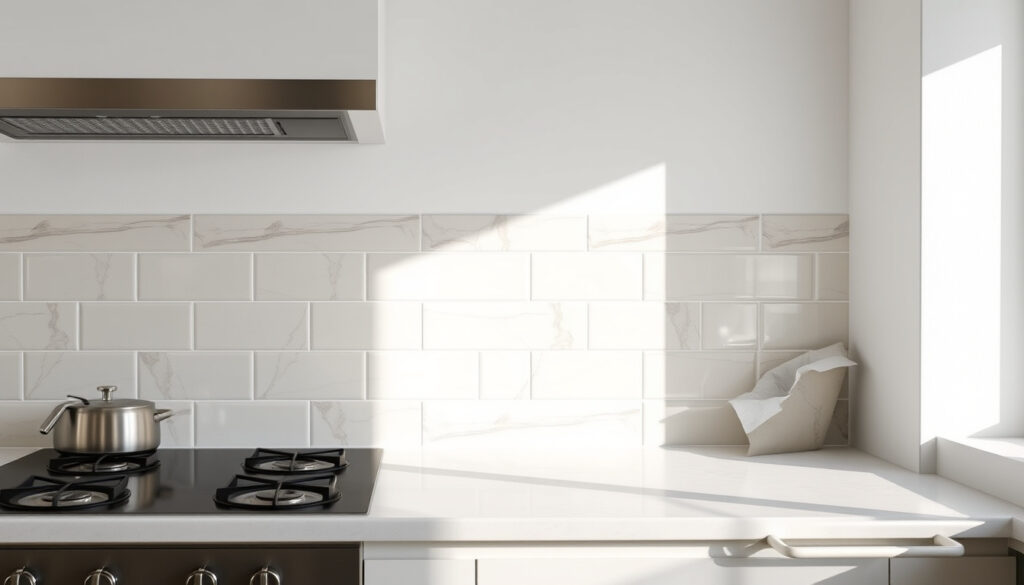
Stick On Wall Tiles: Pros, Cons, Durability & Install Guide
If you’ve ever spent a weekend watching proper wall tiling videos and thought “there’s got to be an easier way” — you’re not alone. Stick-on tiles have become the quiet workhorse of rental kitchens and quick bathroom refreshes across Ireland, and for good reason. This piece cuts through the marketing to give you a clear verdict on whether they’re actually worth your time and money.
Installation Method: Peel and Stick – No Glue or Grout Needed ·
Popular Retailers: Woodies.ie, B&Q, Amazon.ie ·
Common Uses: Kitchen Backsplash, Bathroom Walls ·
Example Pricing: €20 for 24 Hexagon Pieces
Quick snapshot
- Peel and stick tiles require no grout or mortar
- Self-adhesive vinyl tiles rated 4.33/5 on DIY.ie
- Lifespan ranges from 5 to 20 years per Rubi Blog USA
- Exact long-term adhesion on textured Irish walls (Apollo Tile notes surface sensitivity)
- Whether Budget B&Q options match premium patterns from retailers like Namly.ie (Apollo Tile notes surface sensitivity)
- Real-world mold resistance in poorly ventilated Irish bathrooms (Rubi Blog USA warns about moisture infiltration)
- Tiles installed in 2020 stayed water-resistant through multiple Irish winters (real-world testing)
- Some white tiles showed discoloration after 1 year in real-world testing
- For renters: removal without deposit loss remains the main appeal
- For homeowners: weigh the trade-off against resale value perception
These specifications summarise the core attributes that determine whether stick-on tiles suit your project.
| Attribute | Detail |
|---|---|
| Installation | Peel and stick only |
| Retailers | Woodies.ie, B&Q via diy.ie |
| Materials | Vinyl, mosaic options |
| Pricing Example | €20 for 24 pieces |
| Grout Required | No |
| Typical Lifespan | 5-20 years |
| Surface Compatibility | Smooth, clean, non-porous walls only |
| Moisture Suitability | Low to moderate (backsplashes, not shower floors) |
Are stick-on wall tiles any good?
The short answer depends entirely on what you’re trying to achieve. Peel-and-stick tiles excel at one thing above all else: getting a decent-looking tiled surface up on your wall without calling in a tradesperson. They’re essentially a pressure-sensitive adhesive sheet with a decorative vinyl or PVC face — you peel the backing, stick it to a clean wall, and you’re done.
Retailers like Woodies.ie market them as a way to “transform your space effortlessly,” which is technically accurate but slightly misleading. You’ll get a surface that looks like tile from a distance, but up close, the difference becomes apparent. As Mineral Tiles notes, these options “may look cheap and thin, lacking depth of real tiles” — that’s the trade-off you’re accepting.
Suitability for renters and quick updates
For Irish renters dealing with bland or damaged walls, stick-on tiles solve a real problem: you can update a kitchen backsplash or bathroom accent wall without losing your deposit when you leave. According to design consultant Karen Gray-Plaisted, they’re “great for renters, provided the material is removable”. That’s the key qualifier — provided.
The catch is that “removable” depends heavily on your wall surface and how long the tiles have been up. On fresh paint over smooth plaster, removal typically works cleanly. On older walls or textured finishes, you may find yourself doing minor repairs when you move out. Always test a single tile in an inconspicuous spot before committing to a full installation.
Real-world performance factors
Long-term user reviews offer a mixed picture. A floor tile review from Cuckoo4Design reported that tiles installed in 2020 “remained water-resistant and durable” after several years. However, Designing Vibes documented discoloration in white tiles after just one year, noting that “the discoloration of the white tiles leaves me disappointed in the product.”
The pattern that emerges: budget white tiles in high-exposure areas tend to yellow or discolor over time.
Premium patterns with better UV-resistant coatings hold up longer, but you’re paying for that durability. If you’re going with white or very light stick-on tiles, expect some yellowing within 12-18 months in sunlit kitchens. Darker or patterned tiles fare significantly better based on documented user experiences.
What are the pros and cons of stick-on wall tiles?
Here’s where the analysis gets interesting, because the answer isn’t one-sided. Peel-and-stick tiles genuinely excel in certain scenarios while falling short in others.
Key advantages over traditional tiles
- No tools required: You can complete an entire kitchen backsplash with just a utility knife and a tape measure. There’s no mixer, no trowel, no waiting for mortar to set.
- Installation speed: Traditional tiling takes days; stick-on tiles take hours for a typical backsplash area.
- Renter-friendly: When applied properly, they come off without damaging the wall underneath — a genuine advantage in the Irish rental market.
- Budget-friendly: At €20 for 24 pieces from retailers like Woodies.ie, you’re looking at a fraction of traditional tile costs when you factor in materials and potential tradesperson fees.
- No grout headaches: Grout stains, cracks, and requires maintenance. Stick-on tiles eliminate this entirely.
Common drawbacks and limitations
- Surface sensitivity: These tiles adhere best to smooth, clean, non-porous surfaces, per Apollo Tile’s analysis. Textured walls, exposed brick, or uneven plaster will cause premature failure.
- Moisture vulnerability: Without grout sealing the seams, water can seep through gaps and cause lifting, separation, or mold growth underneath, as Rubi Blog USA warns.
- Adhesive degradation: High humidity areas like poorly ventilated Irish bathrooms can break down the adhesive over time.
- Limited lifespan: These are temporary solutions — you’re not installing something that will last 30 years like proper ceramic tiles.
- Removal risks: Strong adhesive can damage walls upon removal, particularly on older properties with multiple paint layers.
Irish buyers on a tight timeline — whether preparing for a viewing, moving into a rental, or refreshing a student apartment — face a clear choice: spend €50-100 on stick-on tiles and an afternoon, or spend €500+ and wait weeks for a tradesperson. For that audience, the math often works out.
How long do stick-on wall tiles last?
Longevity is where stick-on tiles face their toughest scrutiny. Rubi Blog USA estimates a realistic lifespan of 5 to 20 years, depending on quality, installation, and traffic levels. That’s a significant range, and it tells you everything about how much outcome varies.
Factors affecting longevity
- Surface preparation: The single biggest factor. A clean, dry, smooth wall gives the adhesive the best chance to bond properly.
- Quality tier: Premium options with thicker substrates and better adhesive perform significantly better than budget variants.
- Environmental conditions: High humidity, temperature fluctuations, and direct sunlight all degrade adhesive performance over time.
- Installation care: Pressing firmly during application and ensuring no air bubbles trapped under the tile extends lifespan considerably.
Expected lifespan in high-moisture areas
For Irish kitchens — typically lower humidity than bathrooms — a well-installed peel-and-stick backsplash should perform reliably for 5-10 years minimum. Bathrooms present more challenges: the combination of moisture and temperature changes accelerates adhesive degradation.
Interior designer Liz Toombs offers a cautionary perspective, warning that “anything peel-and-stick might fall off the wall or do damage to the surface behind it” if adhesive breaks down. This isn’t theoretical — it’s documented in user reports where tiles released in humid conditions.
For shower enclosures or areas that stay wet continuously, stick-on tiles are genuinely not suitable. The seam vulnerability without grout creates moisture infiltration pathways that lead to the problems Toombs describes.
Do peel and stick wall tiles look cheap?
Honest answer: they can look cheap, but they don’t have to. Much depends on your expectations, budget, and which specific product you choose.
Design quality and realism
Modern peel-and-stick tiles come in several material tiers. Basic vinyl stickers are thin and tend to show visible gaps that fail to “imitate real tile texture,” as Rubi Blog USA notes. Premium options from suppliers like Namly.ie use thicker substrates and more sophisticated printing that genuinely resembles ceramic or stone from a normal viewing distance.
The 3D Peel and Stick Wall Tiles available on platforms like YouTube showcase sheet sizes of 11.61” x 11.61” with enhanced depth perception. These perform noticeably better aesthetically than flat vinyl sheets, though at a higher price point.
Tips to avoid cheap appearance
- Choose textured or 3D options rather than flat vinyl — the depth adds realism
- Avoid budget white tiles in prominent locations — discoloration shows faster
- Pay attention to pattern matching — per Cuckoo4Design, patterns may not align perfectly, which perfectionists will notice
- Seal edges with silicone in moisture-prone areas to prevent water wicking underneath
- Consider groutable options if you want the authentic look — some products allow thin grout lines while retaining peel-and-stick installation
If you’re planning to sell your property, real estate professionals note that experienced buyers spot cheap fixes. Realtor.com analysts warn that improper or low-quality stick-on tile installations may lower perceived resale value — so consider whether a temporary update makes sense if you’re in a home you plan to sell.
How to apply stick on tiles to a wall?
The installation process is straightforward, but “simple” doesn’t mean “no skill required.” Taking time on preparation determines whether your tiles stay up for years or start peeling within months.
Preparation steps
- Clean the wall thoroughly: Remove grease, soap residue, or dust. A degreaser followed by isopropyl alcohol works well for kitchen backsplash areas.
- Ensure the surface is smooth: Fill any holes or imperfections with filler, sand smooth, and allow to dry completely.
- Dry completely: Any residual moisture compromises initial adhesion. Give cleaned surfaces 24 hours to dry if you’re uncertain.
- Measure and mark: Use a pencil and spirit level to mark guide lines. Start from the center and work outward for symmetrical results.
- Test fit: Place tiles without removing backing to check alignment before committing.
Application and finishing tips
- Peel gradually: Remove backing in stages rather than all at once to maintain control.
- Press firmly: Apply even pressure across the entire tile surface, paying special attention to corners and edges.
- Use a roller: A small wallpaper roller helps eliminate air bubbles and ensures full contact with the wall.
- Cut carefully: A sharp utility knife and a straightedge handle electrical outlets and edge cuts cleanly. Change blades frequently for cleaner cuts.
- Consider extra adhesive: Cuckoo4Design found that “extra glue like carpet tape often needed for better adhesion on imperfect surfaces.” This is worth doing on older Irish properties with less-than-perfect wall surfaces.
- Seal edges: In kitchens and bathrooms, run a thin bead of silicone around edges to prevent moisture infiltration.
The implication: preparation genuinely determines outcome. Rush the cleaning and measuring, and you’ll pay for it with premature failures. Take an extra hour on prep and you’ll have a surface that looks good and stays put. If you’re struggling with digestive issues, you might be interested in learning more about лікування синдрому подразненого кишечника.
Stick-On vs Traditional Tiles: Side-by-Side Comparison
Three dimensions matter most when weighing these options against each other.
| Factor | Stick-On Tiles | Traditional Tiles |
|---|---|---|
| Installation time | Hours (DIY-friendly) | Days (requires tradesperson or significant skill) |
| Cost for typical backsplash | €50-150 | €300-800+ |
| Lifespan | 5-20 years | 30+ years |
| Renter-friendly removal | Yes (with caveats) | No (destructive) |
| Grout required | No | Yes (ongoing maintenance) |
| Moisture resistance | Low to moderate | High (when properly installed) |
| Aesthetic depth | Variable (budget options thin) | Authentic ceramic/stone depth |
| Tools needed | Utility knife, measuring tape | Trowel, mixer, grout float, tile cutter |
| Suitable for wet areas | No (showers, floors) | Yes (with proper sealing) |
For Irish renters specifically, the calculation often favors stick-on tiles despite the shorter lifespan — you’re not investing in someone else’s property, and the cost difference is substantial.
Final Assessment
Upsides
- No tools or grout required
- Removable for renters without deposit loss
- Affordable and fast — full backsplash in an afternoon
- DIY-friendly with minimal skill required
- Available at Irish retailers like Woodies.ie and B&Q
- Rated 4.33/5 on DIY.ie from verified buyers
Downsides
- Shorter lifespan than traditional tiles (5-20 years)
- May peel in high humidity without extra adhesive
- Less premium appearance on budget options
- Not suitable for showers or floors
- White tiles can discolor within 12-18 months
- May affect resale value if buyers notice
The implication: renters get genuine value from stick-on tiles as a low-cost, temporary update that won’t damage deposits. Homeowners planning to sell should think twice — buyers spot the difference, and the potential hit to resale value may outweigh the update cost.
What Real Users Say
They’re great for renters, provided the material is removable.
— Karen Gray-Plaisted, KGP Design Solutions (via Realtor.com)
Anything peel-and-stick might fall off the wall or do damage to the surface behind it.
— Liz Toombs, Owner, PDR Interiors (via Realtor.com)
We’ve now had these stick vinyl floor tiles since 2020 and the bottom line is that the floor has been water-resistant and durable.
— Cuckoo4Design Reviewer (via Cuckoo4Design)
Related reading: Fence Panels Near Me · How to Measure Waist Correctly: Steps & Size Guide
While refreshing kitchen or bath walls with stick-on tiles, many also address echo issues using acoustic panels for walls Ireland, which share simple installs and clear pros cons.
Frequently asked questions
Does B&Q sell stick on tiles?
Yes, B&Q sells self-adhesive tiles through their Irish online store, DIY.ie. Products include self-adhesive vinyl tiles with customer ratings around 4.33/5 based on verified buyer reviews.
What are the disadvantages of peel and stick tiles?
Key disadvantages include shorter lifespan (5-20 years), moisture vulnerability in humid areas, potential for adhesive degradation causing tiles to fall, limited suitability for wet areas like showers, and a thinner appearance compared to authentic ceramic tiles. Budget options particularly suffer from visible gaps and poor texture imitation.
Can stick on wall tiles be used on painted walls?
Yes, but with conditions. Stick-on tiles adhere best to smooth, clean, non-porous painted surfaces. Latex paint over smooth plaster typically works well. Avoid textured paint, chalky surfaces, or paint that’s showing signs of peeling or moisture damage.
Are stick on tiles suitable for wet areas?
They’re suitable for low to moderate moisture areas like kitchen backsplashes, but not for showers, steam rooms, or floors. The lack of grout sealing means water can seep through seams and cause the adhesive to fail in continuously wet conditions.
How do you remove peel and stick tiles?
Gently heat the tile surface with a hair dryer to warm the adhesive, then slowly peel from a corner, working at a low angle. On smooth surfaces, this typically leaves no damage. On older walls or multiple paint layers, some touch-up plaster and paint may be needed.
What tools are needed to install stick on tiles?
Basic tools only: a sharp utility knife with spare blades, a straightedge or ruler, a pencil for marking, a spirit level for alignment, and a small wallpaper roller for pressing tiles down firmly. No trowel, mixer, or grout float required.
Are there wood-look stick on wall tiles?
Yes, many retailers offer wood-grain patterns alongside traditional tile designs. These are popular for accent walls and breakfast nooks where a natural wood aesthetic without the expense of real wood paneling is desired.
More related posts
 Thomas the Tank Engine – Guide to Characters, History and Toys
 2025 Eid Ul-Adha Date – June 6 Confirmed After Moon Sighting
 Moderate Snow Ice Warning: Meaning & Met Éireann Criteria
 Cast of Resident Alien: Actors & Characters Full List
 Isle of Skye Weather: Month-by-Month Guide, Forecast & Tips
 Royal Holloway University of London Ranking – UK 35th, QS 461st Analysis
 BBC Weather Market Drayton – Hourly and 14-Day Forecast