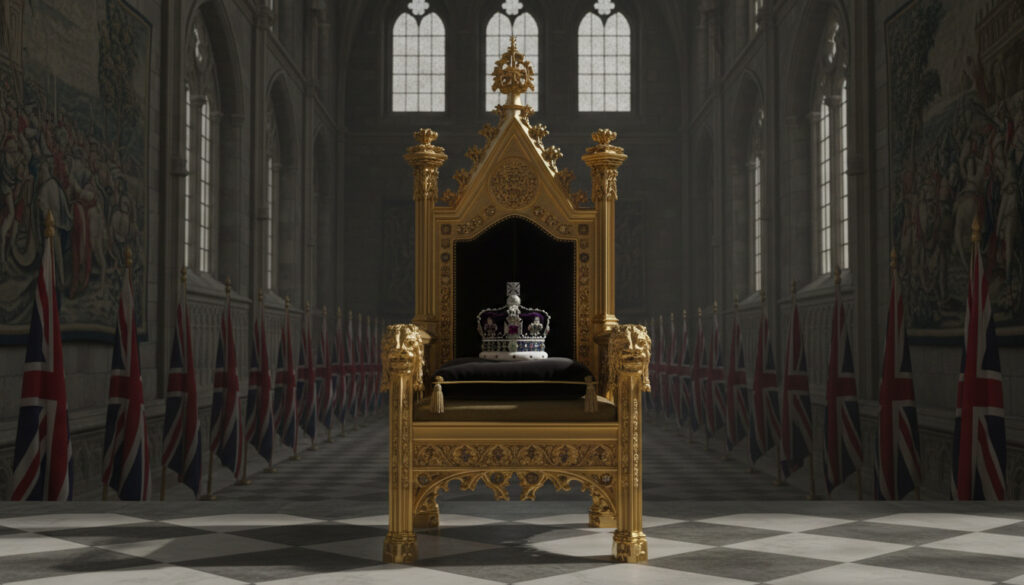
The Queen is Dead – Elizabeth II Death Timeline and Succession
On September 8, 2022, Queen Elizabeth II died at Balmoral Castle in Scotland, marking the end of the longest-reigning British monarch’s 70 years on the throne. The announcement, delivered by Buckingham Palace at 6:30 p.m. BST, confirmed that the death occurred in September at the age of 96.
Her passing initiated immediate constitutional succession, with Prince Charles becoming King Charles III at the precise moment of her death. The historic transition prompted both profound national mourning and the activation of meticulously planned state protocols.
The traditional proclamation “The Queen is dead, long live the King” echoed across the United Kingdom, a phrase steeped in centuries of monarchical tradition yet freshly resonant as the nation confronted the end of the second Elizabethan era.
When and How Did Queen Elizabeth II Die?
- Death certificate lists “old age” as official cause, registered by Princess Anne
- Sovereign passed at 3:10 p.m. BST after 70-year reign concluded at age 96
- No interregnum occurred; Charles became king instantaneously per constitutional protocol
- Final 24 hours witnessed by daughter Princess Anne at Scottish residence
- Official announcement withheld until 6:30 p.m. following family gatherings
- Ten-day national mourning period activated immediately post-announcement
- State funeral held September 19, 2022, at Westminster Abbey
| Age at Death | 96 |
| Reign Length | 70 years, 214 days |
| Date of Death | September 8, 2022 |
| Time | 3:10 p.m. BST |
| Location | Balmoral Castle, Aberdeenshire |
| Official Cause | Old age |
| Announced | 6:30 p.m. BST, September 8 |
| Registered | September 16, 2022 |
What Does ‘The Queen is Dead, Long Live the King’ Mean?
The phrase traces its origins to 16th-century France, where courtiers proclaimed “Le roi est mort, vive le roi!” upon the death of Louis XV in 1715. This declaration served not merely as announcement but as constitutional affirmation.
French Origins and Monarchical Continuity
The expression emerged from the recognition that the Crown never dies. While the sovereign passes, the monarchy itself remains continuous, transferring immediately to the heir without interregnum. French tradition formalized this concept to prevent power vacuums during transitions.
British Adaptation and Public Proclamation
English monarchs adopted and adapted the tradition, with notable usage following the death of Queen Victoria and subsequent sovereigns. The proclamation prevents constitutional gaps by declaring the new reign simultaneous with the previous monarch’s death.
The declaration signifies that the Crown never dies. While the sovereign passes, the monarchy transfers immediately to the heir, ensuring no power vacuum exists between death and accession.
Who Succeeded Queen Elizabeth II as Monarch?
Immediate Accession of King Charles III
At 3:10 p.m. on September 8, 2022, Prince Charles automatically became King Charles III. British constitutional protocol permits no interregnum; the heir accedes at the exact moment of the predecessor’s death. Government records confirm this immediate transition.
The Formal Proclamation Process
While accession occurs automatically, formal proclamation followed on September 10, 2022, at St. James’s Palace. The Accession Council convened to acknowledge the new king, though this ceremony recognizes rather than creates the monarch’s authority.
What Happened After Queen Elizabeth II’s Death?
Official Announcement and Family Gathering
Buckingham Palace confirmed the death at 6:30 p.m. on September 8, 2022, following hours of family gathering at Balmoral. BBC News reported that King Charles III, Queen Consort Camilla, Princess Anne, and other family members had traveled to the Scottish estate upon medical concern.
Operation London Bridge Activation
The long-rehearsed funeral plan, Operation London Bridge, activated immediately. This complex protocol coordinated national mourning, lying in state arrangements, and the state funeral held eleven days later.
Official mourning lasted ten days, concluding September 20, 2022. The period included lying in state at Westminster Hall, attended by over 250,000 members of the public, and concluded with burial at Windsor Castle.
While the death certificate cites “old age,” specific medical circumstances remain private, consistent with royal family protocols regarding personal health information and standard registration practices.
What Was the Complete Timeline of Events?
- : Medical staff express concern over the Queen’s condition; family begins gathering
- : Death occurs at Balmoral Castle according to official records
- : Buckingham Palace announces the death publicly
- : King Charles III delivers first address to the nation as monarch
- : Accession proclamation ceremony at St. James’s Palace
- : State funeral held at Westminster Abbey
- : National mourning period officially concludes
What Remains Uncertain Despite Official Confirmation?
| Established Facts | Uncertain Aspects |
|---|---|
| Death certified as “old age” by National Records of Scotland | Specific contributing medical conditions remain undisclosed |
| Princess Anne present during final 24 hours and registered death | Precise circumstances of final moments are private |
| Time of death recorded as 3:10 p.m. at Balmoral Castle | Full medical timeline preceding death not public |
| Family including Charles and Camilla gathered before announcement | Exact sequence of final visits by family members |
How Did the Elizabethan Era Shape Modern Britain?
The 70-year reign of Elizabeth II spanned post-war reconstruction through digital transformation, encompassing fifteen prime ministers from Winston Churchill to Liz Truss. Archival footage documents her coronation in 1953 and seven decades of public service that redefined the modern constitutional monarchy.
Her death marked not merely personal loss but a constitutional watershed, triggering automatic succession protocols developed over centuries yet tested only rarely in modern democratic contexts. The seamless transfer of authority to King Charles III demonstrated the resilience of British institutional continuity.
What Did Official Sources Confirm About the Final Hours?
“The Queen died peacefully at Balmoral this afternoon. The King and The Queen Consort will remain at Balmoral this evening and will return to London tomorrow.”
— Buckingham Palace, September 8, 2022
The National Records of Scotland subsequently released the death certificate, officially registered by Princess Anne on September 16, 2022. This documentation confirmed the time and location while maintaining privacy regarding specific medical details beyond the “old age” designation.
What Continues in the Wake of Elizabeth II’s Passing?
The transition to King Charles III’s reign proceeds through established constitutional channels, with official documentation confirming the seamless accession. While the monarchy adapts to new leadership, the protocols activated during this historic moment proved effective in managing the transition. For cultural context on how British institutions handle periods of change, see The Thick Of It – Clever Political Satire Analysis.
Frequently Asked Questions
When was Queen Elizabeth II’s funeral?
The state funeral occurred on September 19, 2022, at Westminster Abbey, followed by burial at King George VI Memorial Chapel, Windsor Castle.
Where did Queen Elizabeth II die?
She died at Balmoral Castle in Aberdeenshire, Scotland, her private residence and summer retreat.
What was Queen Elizabeth II’s age at death?
She was 96 years old, having been born on April 21, 1926.
How was Queen Elizabeth II’s death announced?
Buckingham Palace issued a statement at 6:30 p.m. BST on September 8, 2022, following family notification.
Who registered the Queen’s death certificate?
Princess Anne registered the death on September 16, 2022, having been present during the final 24 hours at Balmoral.
What is the history of the phrase “The Queen is dead”?
It derives from the 16th-century French “Le roi est mort, vive le roi!”, adapted to signify immediate monarchical continuity without interregnum.
More related posts
 Cast of Vikings TV Series: Main Actors, Salaries, History
 Cast of Train Dreams – Joel Edgerton, Felicity Jones & Full Roles
 Best Ensaimada Near Me: Authentic Mallorca Bakeries
 Saddam Hussein: Capture, Trial, Execution, and Family Fate
 Spire Healthcare Share Price – Latest Levels, Chart and Analysis
 Mark Labbett: Health, Marriage, Children, and Net Worth
 Yoga Poses for 2: Beginners, Friends, Kids & Hard Poses
 What Does RIDDOR Stand For – UK HSE Reporting Guide